Roadmap to Sustainable Recycling in MA
Summary: Upgrade your recycling efforts with 10 simple steps designed to make sustainable living in Massachusetts straightforward and hassle-free.
Description
Upgrade your recycling efforts with 10 simple steps designed to make sustainable living in Massachusetts straightforward and hassle-free. These steps simplify the recycling process, addressing common obstacles like confusing sorting rules and the inconvenience of proper disposal. By leveraging readily available community resources, such as your neighborhood library, and incorporating practical, time-saving measures into your daily routine, you'll find that reducing, reusing, and recycling can be integrated seamlessly into your life. These steps are crafted to overcome the complexity and common misconceptions that often deter people from recycling, ensuring that taking action feels empowering rather than burdensome. With each manageable action, you contribute to a greener Massachusetts, proving that eco-friendly living can be both easy and rewarding.
Deep Dive
DEEP DIVE
1. Community Sharing Initiatives:
-
Libraries aren't just for books; they're also hubs for sustainability. The 'Library of Things' movement is gaining traction, offering tools, kitchenware, and even electronics. Borrowing these items can drastically reduce waste and promote a sharing economy. Check with your local library for available items and how to participate in these programs.
2. Combating Junk Mail:
-
Junk mail is more than just an annoyance; it's a significant waste issue. To reduce this, register for services that remove your address from junk mail lists. For the unavoidable mail, recycling is key. Be sure to remove any plastic films or stickers before recycling paper materials.
3. Proper Sorting Techniques:
-
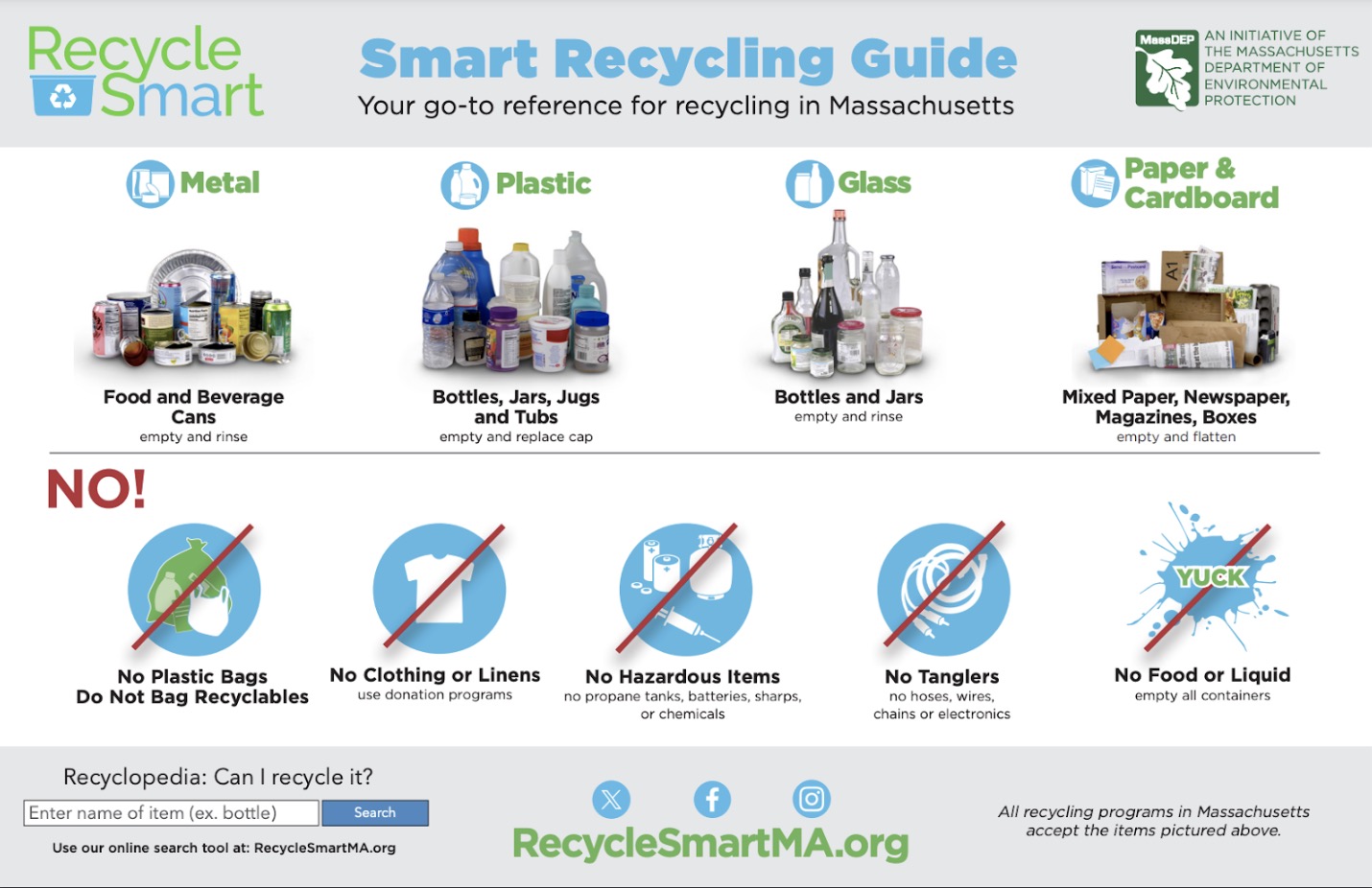
Massachusetts has specific guidelines for recycling. Familiarize yourself with the local rules—what can be recycled curbside, and what needs to be taken to specialized facilities. For example, most communities accept metals, paper, certain plastics, and glass, but each category often has specific guidelines to ensure effective recycling.
4. Avoiding Non-Recyclables in Bins:
-
Contamination is a huge problem in recycling streams. Items like plastic bags and tanglers can damage recycling equipment. Similarly, food and liquid waste can ruin large batches of recyclables. Always clean your recyclables and follow the local guidelines to avoid contamination.
5. Repurposing Before Recycling:
-
Before tossing items into the recycling bin, consider if they can serve a new purpose. Old jars and containers can be excellent for storage or DIY projects, and scrap paper can be reused for notes or crafts. This not only saves resources but also extends the life cycle of the products.
6. E-Waste Management:
-
Electronics can't be recycled curbside due to their hazardous components. Massachusetts offers designated e-waste recycling drop-off points. These ensure that toxic materials are handled correctly and valuable metals are recovered.
7. Specialized Community Programs:
-
Batteries, light bulbs, and similar items require specific recycling processes. Many communities have special collection events or drop-off locations. Participating in these programs ensures that hazardous materials are not entering the environment.
8. Home Composting:
-
Composting at home can divert a substantial amount of waste from landfills. By turning food scraps into compost, you not only reduce waste but also enrich the soil for your garden, reducing the need for chemical fertilizers. Compost also brings life back to our garden and farm soils, allowing them to absorb and store more climate-warming carbon from the atmosphere
9. Sustainable Consumer Choices:
-
Support local businesses that prioritize sustainability. Purchasing from stores that use minimal packaging, offer bulk products, or have returnable containers can significantly cut down on packaging waste.
10. Policy and Community Engagement:
-
Real change often requires policy support. By getting involved in local environmental policies and initiatives, you can help shape the practices and regulations that govern recycling and waste management in Massachusetts.
Adopting these practices not only helps Massachusetts's environment but also fosters a culture of sustainability that can inspire others and create lasting change.
Steps to Take
STEPS
1., Engage with community sharing by borrowing items from your local library’s special collection, reducing the need for new purchases.
2. Tackle the Junk Mail Jungle: Opt out of junk mail lists and recycle the rest to decrease the 4 million tons ending up in landfills.
3. Use the Recycle Smart MA's guide to correctly sort your recyclables - metals, plastics, glass, and paper.
4. Steer clear of recycling plastic bags, clothing, hazardous materials, tanglers like hoses, and any food or liquid waste.
5. Before recycling, see if you can repurpose items. Turn old jars into storage containers or use scrap paper for notes.
6. Electronics require special handling. Locate your nearest e-waste recycling drop-off to ensure safe processing.
7. Engage in community recycling programs for items like batteries, light bulbs, and other special materials.
8. Start composting at home to turn food scraps into rich soil, reducing organic waste in landfills.
9. Choose to buy from businesses that prioritize sustainability and use minimal packaging.
10. Get involved in local environmental policies and initiatives to support systemic recycling improvements.
Stay Updated! Regulations change. Keep up with the latest recycling news and tips from recyclesmartma.org.
- All Actions